Installing a CCTV camera system is one of the most effective ways to improve the security of any home, office, retail store, school, hospital, or industrial facility. However, simply purchasing high-quality CCTV cameras does not guarantee complete protection. The overall performance of your surveillance system depends on proper planning, correct camera placement, and professional installation. Even a small mistake during installation can create security gaps that reduce the effectiveness of the entire system.
Many businesses spend thousands of rupees on advanced CCTV equipment but still fail to achieve reliable surveillance because of avoidable installation mistakes. Poor camera angles, insufficient storage, weak network security, and incorrect equipment selection are some of the most common problems. Understanding these mistakes before installation helps businesses build a smarter, more reliable, and future-ready security solution.
Choosing the Right Camera for the Right Location
Not every CCTV camera is designed for every environment. Indoor cameras are suitable for offices, classrooms, reception areas, and retail stores, while outdoor cameras are built to withstand rain, dust, heat, and other environmental conditions. Installing an indoor camera outside can significantly reduce its lifespan and performance. Selecting the right type of camera based on the installation area ensures better durability and more reliable surveillance.
Poor Camera Placement Creates Blind Spots
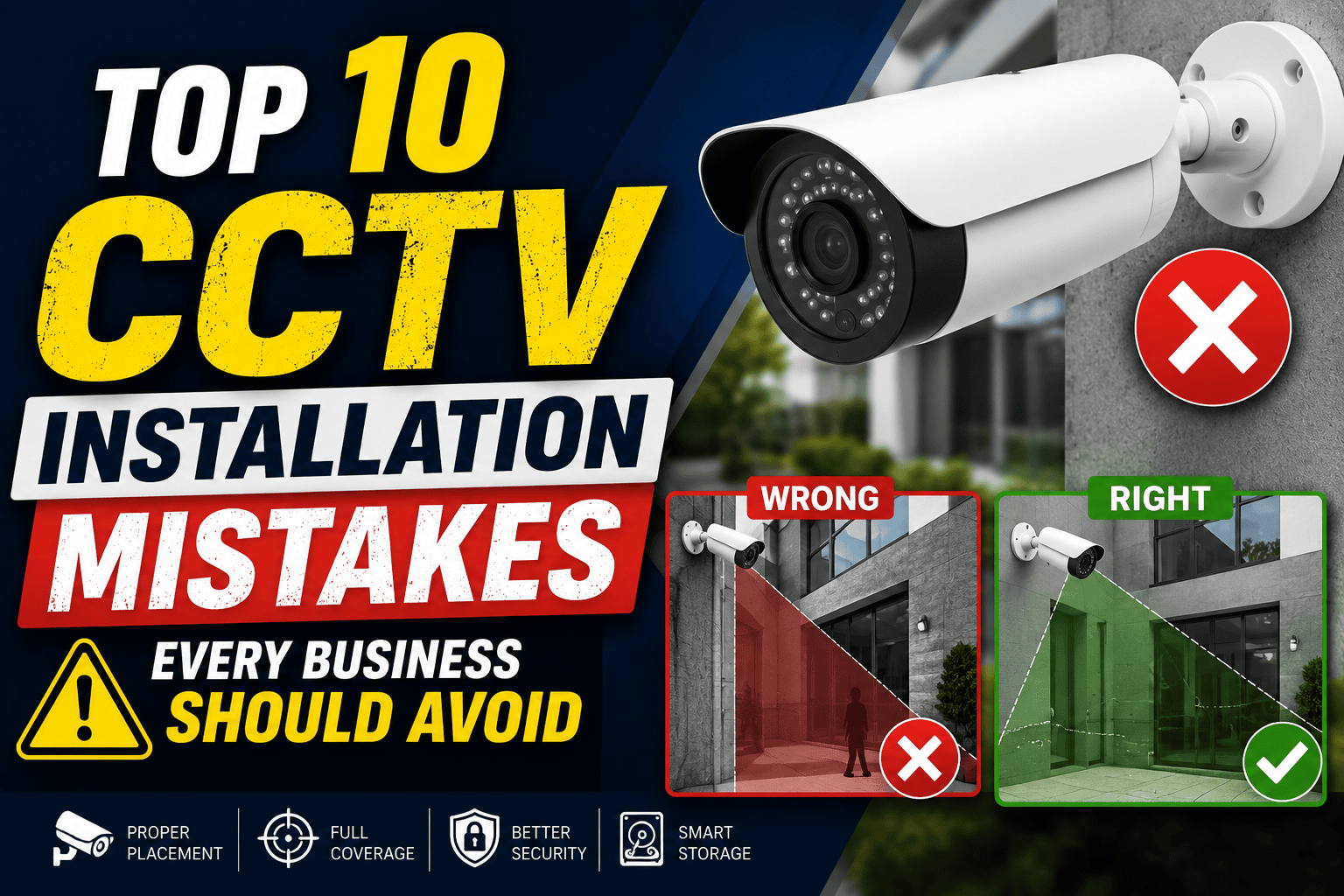
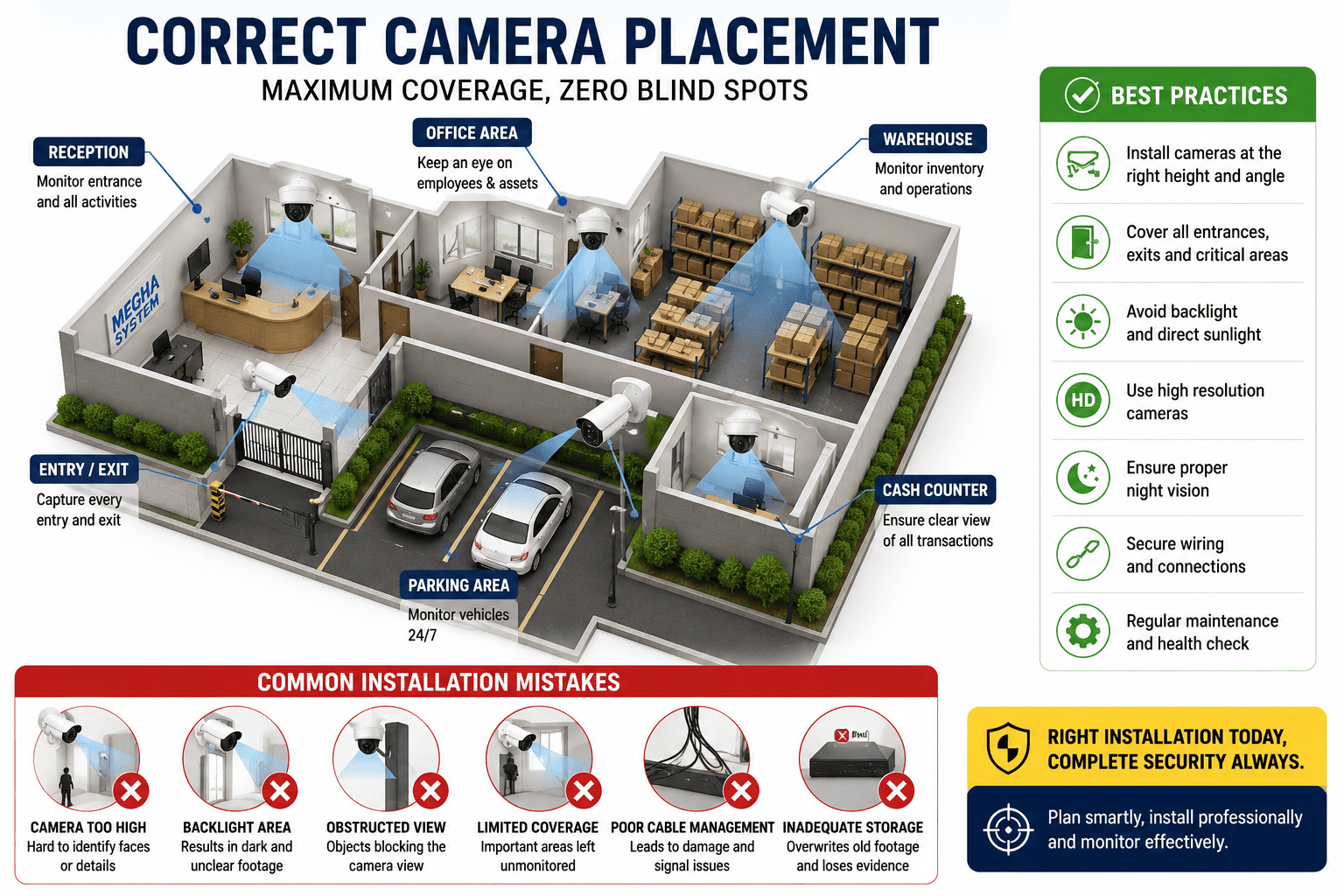
One of the biggest CCTV installation mistakes is placing cameras without planning the complete field of view. Cameras installed too high, too low, or facing the wrong direction often leave important areas uncovered. Entry gates, exits, parking areas, cash counters, reception desks, and warehouses should always remain within the camera’s viewing angle. Proper placement reduces blind spots and captures every important activity clearly.
Selecting Low Resolution Cameras
Many buyers choose cameras only based on price instead of image quality. While low-resolution cameras may appear affordable, they often fail to capture clear facial details or vehicle number plates during an incident. Modern surveillance systems generally recommend 2MP, 4MP, or higher resolution cameras depending on the application. Better image quality provides stronger evidence and improves overall security.
Ignoring Night Vision Performance
Security incidents are more likely to occur during the evening or night when visibility becomes limited. Installing cameras with poor night vision can result in blurry or unusable footage during critical situations. CCTV cameras equipped with infrared LEDs or full-color night vision technology provide clear monitoring even in complete darkness. Businesses that operate 24 hours a day should always prioritize cameras with excellent low-light performance.
Installing Too Few Cameras
Trying to reduce installation costs by using fewer cameras often leaves several important areas without surveillance. Every business has multiple vulnerable points that require continuous monitoring. Before installation, it is important to identify entrances, exits, storage rooms, parking areas, and other sensitive locations. A properly designed CCTV layout ensures complete coverage without unnecessary equipment.
Overlooking Storage Requirements
Storage planning is an essential part of every CCTV installation project. High-resolution cameras generate larger video files, which require adequate storage capacity for long-term recording. Many businesses discover their storage limitations only after the hard drive becomes full. Choosing the correct DVR, NVR, and surveillance hard disk helps preserve recordings for future investigations and legal requirements.
Weak Network Security and Default Passwords
Modern IP CCTV cameras are connected to computer networks and the internet, making cybersecurity equally important. Using default passwords or outdated firmware can expose the surveillance system to unauthorized access. Businesses should always create strong passwords, regularly update firmware, and secure their network to protect recorded footage from cyber threats and unauthorized monitoring.
Poor Cable Management and Power Backup
The quality of installation materials directly affects the long-term performance of a CCTV system. Loose wiring, poor-quality connectors, and unstable power supplies often lead to signal interruptions and maintenance problems. Proper cable management improves system reliability while backup power solutions ensure uninterrupted recording during power failures. A professionally installed system remains stable for many years with minimal maintenance.
Skipping Regular Maintenance
Installing CCTV cameras is only the first step toward building a secure environment. Dust accumulation, damaged cables, software issues, and storage failures can gradually reduce surveillance performance if regular maintenance is ignored. Cleaning camera lenses, checking recording status, updating firmware, and inspecting hardware at regular intervals helps keep the system operating efficiently throughout the year.
Conclusion
A CCTV system delivers maximum protection only when it is installed correctly and maintained regularly. Avoiding common installation mistakes helps businesses achieve better image quality, wider coverage, reliable recording, and longer equipment life. Whether you are securing a home, office, school, hospital, hotel, warehouse, or industrial facility, investing in professional CCTV installation ensures your surveillance system continues protecting your people and property every day.
Frequently Asked Questions (FAQs)
1. What is the most common CCTV installation mistake?
The most common mistake is poor camera placement, which creates blind spots and leaves important areas without surveillance coverage.
2. How many CCTV cameras does a business need?
The required number depends on the size of the property, entry points, parking areas, and critical locations that need continuous monitoring.
3. Is professional CCTV installation necessary?
Yes. Professional installation ensures proper camera positioning, secure wiring, correct network configuration, and complete surveillance coverage.
4. How long should CCTV footage be stored?
Most businesses prefer storing CCTV recordings for at least 30 days, while industries and financial institutions may require longer retention periods.
5. How often should CCTV cameras be maintained?
A complete inspection every three to six months is recommended to clean cameras, verify recording quality, update firmware, and ensure all equipment is functioning properly.